
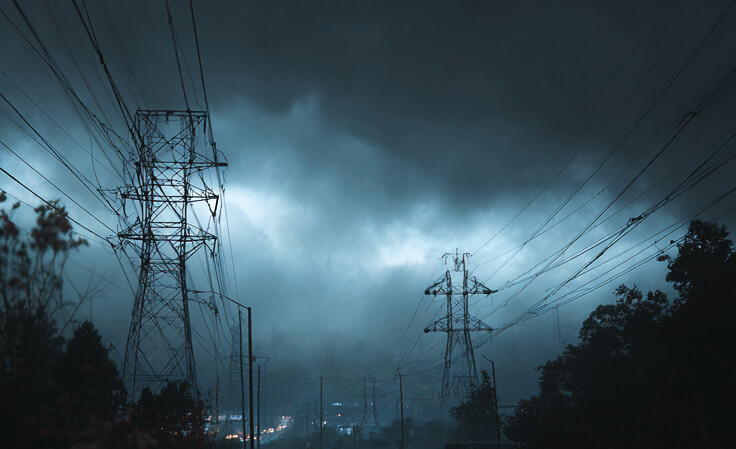
I've been seeing rumbles of a "widespread blackout" coming down the pipes. Well, if it does, are you prepared?
In a way, 2020 and the chaos surrounding that, prepared me for the future. Standing in the Walmart staring at the empty shelves made me realize that I need to always be prepared because things change fast and at the drop of a hat!
Most people go through life assuming the lights will come on when they flip a switch. It’s a quiet assumption baked into the modern world, electricity flows, devices charge, refrigerators hum, water runs, and life carries on without interruption.
But we saw the widespread blackouts in Portugal this past summer...what if that was just a test run?
The power grid has become such an invisible backbone of daily life that its fragility rarely crosses anyone’s mind until something disrupts it, a storm, a transformer failure, a heat wave, or a mysterious blackout that reminds us how thin the line between “normal” and “not normal” really is. And while our grandparents instinctively understood that self-sufficiency was the safest form of security, many people today have never been taught what to do if their home unexpectedly goes dark.
The truth is not dramatic or conspiratorial; it’s simply practical: the power grid is aging, strained, and increasingly unreliable, and pretending otherwise only leaves households vulnerable. Preparing for outages isn’t fear-based, it’s thoughtful, wise, and rooted in the same common sense that guided every generation before the modern one. There is a calm confidence that comes from knowing your family can remain safe, warm, fed, and hydrated even if the grid goes down. Preparedness isn’t paranoia. It’s responsibility.
To understand why readiness matters, you first have to understand the condition of the system we depend on.
The Electrical Grid Was Never Designed for the Life We Live Now
If you look at the architecture of the U.S. electrical grid, most of it was built decades ago in an era when households were smaller, technology was simpler, weather patterns were more predictable, and energy demands were nowhere near their current levels. The grid wasn’t designed for a world where every home runs multiple refrigerators, streaming devices, gaming systems, digital assistants, air conditioners, and a dozen chargers plugged into every corner. It certainly wasn’t designed for mass electrification or a society that requires nonstop power just to function. A system built for moderate, predictable use is now being pushed to its absolute limits.
Thought I believe energy is truly free and can be harnessed...that technology is hidden so we are stuck with the stinky power companies.
Compounding this strain is the reality that our infrastructure is aging faster than it’s being upgraded. Many transformers, substations, and distribution lines have surpassed their intended lifespan. Repairs are often reactive rather than proactive, fix what breaks, patch what fails, rotate crews from crisis to crisis. It’s not hard to see why outages are no longer rare disruptions but expected seasonal occurrences. When a system is stressed, old, and overloaded, cracks naturally appear.
Weather amplifies those cracks. Storms that used to be considered “once in a decade” now arrive yearly, bringing high winds, ice, flooding, and heat waves that overload equipment and knock down lines. Heat waves alone can push the grid into rolling blackouts simply because demand outpaces supply. Our climate may be shifting, but the infrastructure meant to carry us through those shifts has not kept up, and relying on a stretched system without personal preparation is a modern gamble most people don’t realize they’re making.
Cybersecurity adds yet another layer of vulnerability. Even federal agencies acknowledge that digital threats pose real risks to electrical systems. A sophisticated attack doesn’t have to be widespread to cause chaos; a single disrupted substation can ripple through entire regions. In a world where almost every power station is digitally monitored or controlled, the threat landscape has become wider than the grid was ever built to handle.
When you see the picture in full, outdated infrastructure, extreme weather, rising demand, and digital vulnerabilities, it becomes clear why preparedness isn’t extreme; complacency is.
What a Power Outage Actually Looks Like When It Lasts More Than a Few Hours
Most people imagine a power outage as a mild inconvenience, an opportunity to light a candle, play board games, and wait for the power company to restore everything by morning. And sometimes, yes, outages really are that simple. But when an outage lasts for several days, or even just a full 24 hours, the ripple effects compound quickly.
In the first few hours, life feels oddly quiet. The refrigerator stops humming, the house feels still, and devices begin their slow decline from fully charged to flashing warnings. By hour ten, the refrigerator is warming, freezers begin to thaw, and food security becomes uncertain. Homes that rely on electric stoves can no longer cook, and wells that depend on electric pumps can no longer provide running water. The house shifts from comfortable to chilly or stifling depending on the season, because heating and cooling systems were never built to function off-grid.
By day two, communication becomes strained. Cell towers only work as long as their backup batteries hold. Wi-Fi is gone. Local stores close because their registers don’t run without power. ATMs shut down. Gas pumps stop working. Without electricity, the smooth machinery of modern life grinds to a halt.
During long outages, the families who fare the best are not the wealthiest or the luckiest, they are the prepared. They have water stored. They have backup ways to cook and stay warm. They have food that doesn’t spoil. They have lighting that doesn’t depend on the grid. They feel calm because they planned ahead. Preparedness is not about building a bunker. It’s about building resilience.
REMEMBER: Even if you are super prepared, act like you are as down-and-out as everyone else. Blend in. Don't shower. Look (and smell) dirty.
Because if you stick out, people will come. You DO NOT want that!
Preparedness Is an Act of Care — Not Fear
Some people hesitate to prepare because the concept has been strangely stigmatized, as if taking responsibility for your home’s resilience somehow implies fear or distrust. But preparedness is simply wisdom in action. Every generation before ours engaged in some form of preparedness, storing food for winter, keeping extra candles, maintaining hand tools, preserving produce, and ensuring that families could weather storms without external assistance.
Preparedness doesn’t look like panic-buying enormous quantities of random supplies. It looks like intentional planning: a shelf of foods you know how to cook, a water supply you can rely on, a heating backup that you understand how to use safely, and a written plan for your household. It’s the opposite of fear, it’s peace through readiness.
This is exactly why I created my Emergency Preparedness Planner, to transform a vague intention into a clear, organized, step-by-step plan that any household can follow. Instead of overwhelming you with scattered advice from a dozen sources, it consolidates everything into one cohesive guide so your preparation is structured, efficient, and actually doable.

This planner ensures that you’re not just “stocking up,” but building a real, functional system of resilience.
Food Preparedness: Why Your Pantry Is the Heart of Your Security
One of the first questions people ask when they start preparing is, “What will we eat if the grid goes down?” It’s a practical question with a surprisingly elegant answer: keep food that is shelf-stable, nutritious, easy to prepare, and familiar to your family. You don’t need exotic emergency meals or buckets of food no one in your home actually likes. What you need is thoughtful rotation and intentional storage.
Here’s where seasonal eating naturally overlaps with preparedness in a beautiful way. Seasonal eating isn’t just about health; it’s about logistics. When you eat seasonally, you buy and harvest foods at peak freshness, which means you have the perfect opportunity to preserve them, and preservation is the foundation of food security.
In spring, you might find yourself overloaded with greens and herbs. Instead of watching them wilt, you can freeze chopped herbs in olive oil cubes, dehydrate spring onions, or blanch and freeze spinach or kale. You could make light brothy soups using spring vegetables and freeze portions for later.
Summer brings an avalanche of produce, tomatoes ripe on the vine, overflowing baskets of berries, cucumbers in endless supply. It’s the best time to can sauces, freeze berries at peak sweetness, ferment cucumbers into crisp pickles, or dry zucchini for soups and stews. A single summer afternoon of canning tomatoes becomes warmth and nourishment in the middle of winter, long after the vines have died.
Fall gives you apples, squash, onions, garlic, carrots, potatoes, and beets, foods that store naturally for months with minimal effort. Apples can be turned into applesauce or canned slices. Squash can sit in a cool pantry through winter. Carrots and beets can be fermented into nutrient-rich sides. These foods were relied on for centuries before refrigeration existed, and they still serve as reliable staples today.
Winter itself teaches you to make hearty meals like broths, stews, roasts, and preserved vegetables which are foods that require little refrigeration and provide stable energy during cold months.
When you understand seasonal eating, you automatically understand how to build a pantry that keeps your family alive even when the grid doesn’t.
You don’t need to hoard if you preserve.
You don’t waste food if you rotate.
You don’t panic if you plan.
Your pantry becomes a living system, not a stockpile.
If you want to learn how to build a food storage, check out my Homestead Prepper's Guide To Food Storage.
Seriously, you NEED a food storage. The grocery stores will be hit first and will be chaotic. You do not want to be running to the grocery store during an emergency.
Water Preparedness: The Most Vital, Most Ignored Element
Electricity is inconvenient to lose, water is dangerous to lose. Many people don’t realize that their water supply depends on electricity. If you have a well, the pump requires power. If you rely on municipal water, pumping stations rely on electricity too. The moment the power goes out, you’re on borrowed time before water stops flowing or becomes unsafe.
Preparedness means you have a set amount of clean water stored, you understand purification methods, and you have redundancy. Not all water needs to be bottled, some can be stored in food-safe containers, some in barrels, some filtered from natural sources. But no household should ever depend solely on the tap.
Power, Heat, and Light: Keeping Your Home Safe and Functional
When the grid fails, the three things people miss fastest are heat, light, and the ability to cook. A home without heat quickly becomes dangerous in winter. A home without a cooling plan becomes unsafe in summer. A home without lighting becomes a hazard, especially with children. And a home without a way to cook quickly pushes families toward unsafe improvisations, which lead to fires and carbon monoxide incidents every year.
Preparedness means having alternate power banks, safe heaters, solar lanterns, candles, backup charging methods, and off-grid cooking tools like camp stoves or propane burners. When these items are organized, tested, and ready, you can settle into an outage rather than scramble in the dark.
Preparedness is peace.
Why Preparedness Feels Like Coming Home
Something deeply shifts when you begin preparing intentionally. You no longer see your household as fragile or dependent. You begin to feel grounded, capable, responsible. You see preparedness not as a dramatic response to danger, but as a natural extension of homestead skills humans have practiced for millennia, storing food, preserving harvests, keeping extra water, building warmth, and organizing tools.
Preparedness stabilizes you.
It strengthens your family.
It turns chaos into calm.
And it starts with having a plan, not just supplies scattered in a closet.
The sooner you begin, the sooner you feel that peace settle in.
FAQs: Power Grid & Home Preparedness
1. Is the grid really unstable, or is this exaggerated?
Outages are increasing nationwide due to aging infrastructure, rising demand, extreme weather, and cybersecurity risks. Preparedness isn’t overreacting, it’s acknowledging patterns and preparing responsibly.
2. How long should a family realistically prepare for?
Most experts recommend at least 72 hours, but many families aim for 7 to 14 days of self-sufficiency, especially regarding food, water, heating, and communication.
3. What’s the biggest mistake people make during power outages?
Depending on the grid to come back quickly. Many outages last longer than expected, and unprepared households face immediate challenges with water, food spoilage, heating, and communication.
4. Do I need expensive gear or a generator to be prepared?
Not necessarily. While generators help, many families thrive using simple systems: solar lanterns, propane stoves, water storage, shelf-stable foods, and organized planning.
5. How does seasonal eating help with preparedness?
Seasonal eating teaches preservation, rotation, storage skills, and natural food rhythms, the same skills that build food resilience during emergencies. It makes your pantry both nutritious and dependable.
