
If you’ve ever stood in front of the mirror tugging gently at your ends, wondering why your hair seems permanently stuck at the same length, you’re not alone. Or maybe your hair is thin, and you wish it was thick. Been there!
Hair that “won’t grow” is one of the most common frustrations I hear about, and it’s also one of the most misunderstood. Hair growth isn’t just about genetics or luck. It’s about environment, nourishment, and consistency. And for many people, the reason their hair isn’t growing has far less to do with their strands and far more to do with what’s happening at the scalp.
Here’s the uncomfortable truth most brands won’t tell you: your hair may technically be growing, but it’s breaking at the same rate, or faster. Or the follicles themselves may be struggling under inflammation, buildup, hormone disruption, or chronic dryness. Growth doesn’t stop overnight. It slows quietly, subtly, until one day you realize nothing has changed in months or even years. And no, another trendy shampoo isn’t going to fix that.
To understand why your hair isn’t growing, you have to zoom out and look at the entire system. Hair is not a cosmetic issue. It’s a biological process. And like any biological process, it responds best to nourishment, not force. The same goes for your skin. If you are wondering why your skin constantly seems to be dry or struggling, learn what could be going wrong by reading my 7 Common Skincare Mistakes That Could Be Hurting Your Skin.
The Growth Myth: Why “More Products” Usually Make Things Worse
Modern hair care has taught us to think aggressively. Stronger formulas. Faster results. More actives. More steps. But hair follicles don’t behave like machines you can push harder to get more output. They behave like soil. When the soil is depleted, compacted, or inflamed, nothing thrives there, no matter how expensive the seeds.
Most conventional hair growth products focus on stimulation without support. They rely on synthetic ingredients, harsh preservatives, drying alcohols, or drug-like actives designed to override the body rather than work with it. In the short term, this can create the illusion of progress. In the long term, it often leads to scalp sensitivity, increased shedding once you stop, and follicles that become dependent instead of resilient.
Healthy hair growth comes from creating the right conditions, not forcing results. That means improving circulation gently, reducing inflammation, restoring moisture balance, and feeding the scalp with lipids and antioxidants it actually recognizes.
The Real Reasons Your Hair Isn’t Growing
One of the biggest reasons hair growth stalls is chronic scalp inflammation. This doesn’t always show up as obvious redness or flakes. Sometimes it looks like tightness, itchiness, tenderness, or a scalp that gets oily too quickly and dry at the same time. Inflammation quietly disrupts the hair growth cycle, shortening the growth phase and pushing more hairs into shedding.
Another major factor is buildup. Modern shampoos, conditioners, dry shampoos, and styling products often leave behind residues that suffocate follicles over time. Add in hard water minerals, synthetic fragrance, and silicones, and you end up with a scalp that can’t breathe. You wouldn’t expect a plant to thrive in compacted, chemical-laden soil, your scalp is no different.
Hormonal disruption also plays a significant role. Many store-bought hair products contain endocrine-disrupting chemicals that interfere with normal hormone signaling. Hair follicles are highly sensitive to hormonal shifts, especially in women. When those signals are disrupted, growth slows, shedding increases, and density declines. Seriously, read the back of the bottles and ask yourself what you are really putting on not only your skin, but your scalp which has larger opening (hair follicles) to absorb what you put on it.
And finally, there’s dryness. A dry scalp isn’t just uncomfortable, it’s inhospitable. Without adequate oils and fatty acids, follicles become fragile and growth weakens. Moisture isn’t optional for hair growth. It’s foundational.
Why Oils Matter More Than You’ve Been Told
For decades, oils were framed as the enemy of hair. Too heavy. Too greasy. Too old-fashioned. So we stripped them out, replaced them with synthetics, and wondered why hair health declined. The irony is that human scalp oil, sebum, is one of the most important components of healthy hair growth. When the scalp lacks compatible oils, it overproduces poor-quality sebum or shuts down balance altogether.
Natural, lipid-rich oils don’t just coat the hair. They penetrate, soften, protect, and signal safety to the scalp. They tell follicles it’s okay to stay in the growth phase longer. They reduce inflammation instead of provoking it. And when blended correctly, they outperform most lab-engineered alternatives without the long-term damage.
This is where a well-formulated, oil-based serum changes everything.
Castor Oil: The Anchor of Growth and Thickness
Castor oil has earned its reputation in hair growth circles for a reason. Rich in ricinoleic acid, castor oil supports circulation to the scalp while deeply conditioning both the skin and hair shaft. I absolutely love castor oil! Better circulation means better nutrient delivery to follicles, which directly impacts growth strength and speed.
Unlike lighter oils, castor oil creates a protective environment that prevents moisture loss and breakage. This is especially important if your hair seems to grow but never gets longer. Breakage is often the real culprit, and castor oil addresses that at the root—literally.
In contrast, many conventional products rely on temporary smoothing agents that mask damage instead of preventing it. Castor oil actually reinforces the hair over time, making growth sustainable instead of superficial.
Jojoba Oil: Teaching Your Scalp Balance Again
Jojoba oil is one of the most fascinating oils in hair care because it closely mimics human sebum. This makes it uniquely effective at restoring balance without clogging pores or causing buildup. When applied consistently, jojoba helps regulate oil production rather than suppressing it.
If your scalp swings between oily and dry, that’s a sign of imbalance, not excess. Jojoba oil works like a translator, helping your scalp remember what “normal” feels like again. This creates an ideal environment for follicles to function properly and remain in the growth phase longer.
Store-bought serums often rely on synthetic emollients that sit on the surface and wash away. Jojoba integrates. It supports. It restores.
Argan Oil: Strength, Elasticity, and Protection
Argan oil is rich in essential fatty acids and antioxidants that protect hair from oxidative stress, heat, and environmental damage. Hair that snaps easily under tension is hair that lacks elasticity, and argan oil directly addresses that weakness.
By improving flexibility and strength, argan oil reduces breakage at the mid-lengths and ends, allowing visible growth to finally show. Healthy hair growth isn’t just about new hair coming in, it’s about preserving what you already have. I love that our hair teaches us lessons about our body. It's about learning to take care of what is already there while nourishing and strengthening what is coming in.
Conventional products often coat strands with silicones to fake smoothness. Argan oil improves the actual structure of the hair, so softness and shine become permanent, not temporary.
Vitamin E Oil: Cellular Support at the Follicle Level
Vitamin E is a powerful antioxidant that protects scalp cells from oxidative damage and supports healthy blood flow. Follicles are living structures, and like all living tissue, they are vulnerable to stress and inflammation.
When applied topically, vitamin E helps repair damaged skin barriers, reduce irritation, and support long-term follicle health. This is especially important for people experiencing shedding due to stress, postpartum changes, or environmental exposure.
Unlike synthetic antioxidants used in many store-bought formulas, natural vitamin E works in harmony with the skin’s own repair mechanisms.
Rosemary Essential Oil: Nature’s Growth Stimulant
Rosemary essential oil has been studied for its ability to support hair growth by improving circulation and reducing inflammation around follicles. Often compared to pharmaceutical treatments, without the side effects, rosemary encourages follicles to stay active and productive. Amazing that nature already knows what we need!
What makes rosemary particularly powerful is that it stimulates without irritating. It wakes the scalp up gently instead of shocking it into action. Over time, this leads to thicker-looking hair, improved density, and reduced shedding.
Many conventional growth products rely on aggressive stimulants that eventually backfire. Rosemary plays the long game, and wins.
Peppermint Oil: Circulation Without Damage
Peppermint oil delivers a cooling sensation that signals increased blood flow to the scalp. This boost in circulation supports nutrient delivery and follicle activity while also creating a clean, refreshed scalp environment.
Unlike synthetic menthols often used in store-bought products, natural peppermint oil doesn’t dry the scalp when properly diluted in nourishing oils. It energizes without stripping, making it ideal for long-term use.
Tea Tree Oil: Clearing the Way for Growth
Tea tree oil supports scalp health by helping reduce microbial imbalance, buildup, and irritation. A congested scalp cannot grow healthy hair, no matter how many growth actives you apply.
By gently purifying the scalp, tea tree oil clears the path for follicles to function optimally. Think of it as removing debris from the soil before planting. Growth doesn’t happen in clutter. Truly, our hair is like a garden and we need to learn how to amend the soil, so the hair grows.
Unlike harsh antifungal agents found in medicated shampoos, tea tree works without disrupting the scalp’s natural ecosystem.
Why This Natural Serum Beats Store-Bought Alternatives
Most store-bought hair growth products are designed for speed, shelf life, and mass appeal—not long-term scalp health. They prioritize quick sensations over real nourishment, often at the expense of follicle integrity.
A natural, oil-based serum works differently. It feeds instead of forces. It restores instead of overrides. And over time, it builds resilience rather than dependence.
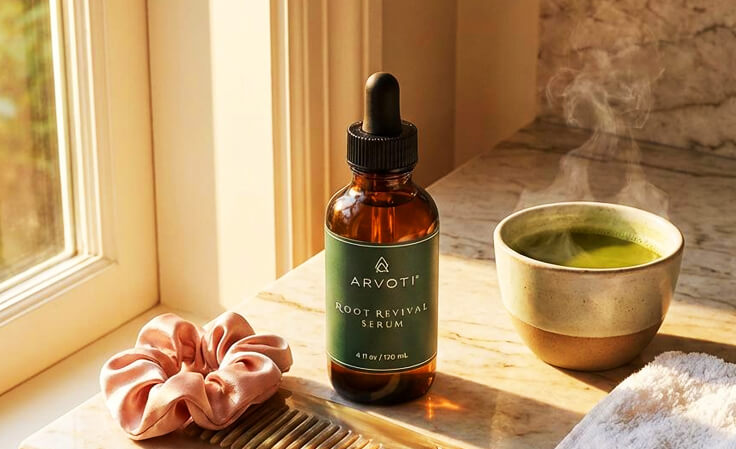
This is where my Gubba Homestead Root Revival Serum comes in. It was created to support hair growth the way the body actually understands, through nourishment, balance, and consistency.
The Bottom Line: Growth Is a Relationship, Not a Hack
If your hair isn’t growing, it’s not broken. It’s communicating. And when you listen, really listen, and respond with ingredients that support rather than fight your biology, growth becomes not just possible, but inevitable.
Healthy hair growth isn’t loud. It’s quiet, steady, and deeply satisfying. And it starts at the root.
Ready to Support Real Growth?
If you’re done chasing miracle products and ready to build a foundation for long-term hair health, Root Revival Serum was made for you. Nourish your scalp, strengthen your strands, and create the conditions where growth can finally thrive. Even if you have dyed your hair a million times, you can still revive your hair. Trust me, my hair went from thin and fried to the most thick and luscious it has ever been! I love my hair!
Frequently Asked Questions
How long does it take to see results from a natural hair growth serum?
Hair growth is a gradual process, and results depend on consistency and overall scalp health. Most people begin noticing reduced shedding and improved scalp comfort within the first few weeks, with visible growth and thickness appearing over several months of regular use.
Can oil-based serums make my hair greasy?
When formulated correctly and used in appropriate amounts, oil-based serums absorb into the scalp without leaving heavy residue. Applying a small amount and focusing on the scalp rather than the lengths helps prevent greasiness.
Is this serum safe for sensitive scalps?
Natural oils and essential oils, when properly diluted, are generally well-tolerated. If you have a highly sensitive scalp, it’s always best to patch test first and introduce new products gradually.
Can I use this serum with my current hair care routine?
Yes. A nourishing scalp serum complements most routines and often improves results by addressing the foundation of hair health rather than just the surface.
Will this help with postpartum or stress-related hair loss?
Supporting the scalp with nourishing oils can significantly improve the regrowth process by reducing inflammation and creating an optimal environment for follicles to recover.
