
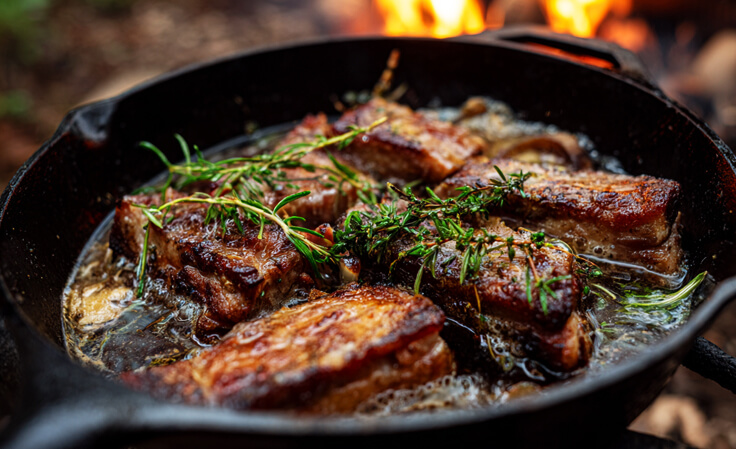
A return to the fats our great-grandparents trusted, the flavors modern life forgot, and the nourishment your body has been waiting for.
A Quiet Revolution in the Kitchen
I chat all of the time online about how when I started avoiding seed oils, I noticed less sunburning and digestive upset. I am SO HAPPY I ditched the seed oils on my homestead.
Across the modern landscape of food trends, dietary confusion, and ever-changing nutrition headlines, an unmistakable shift is happening in homestead kitchens everywhere. Families who once grabbed vegetable oil without a second thought are now reaching for butter, tallow, and lard.
Sadly, I used to think just because "vegetable" was in the title of the oil, it meant it was healthy. Now, I know better, but many do not!
People who grew up thinking canola oil was “heart healthy” are learning that the truth is far more complicated and they have been lied to. And those who’ve spent years wondering why certain health issues keep creeping in are discovering that the solution might be as simple as swapping the oil in their frying pan.
The seed-oil-free movement is not a fad. It’s a return. A return to the fats humanity used for thousands of years, long before factories, solvent extractions, and industrial processing shaped the modern grocery aisle. It’s a return to flavor, nourishment, simplicity, and common sense—a return to a time when food was food and not a chemically altered product engineered to last on a shelf.
Homesteaders have been ahead of this curve. In a kitchen where ingredients are intentional, traditional, and deeply connected to the land, seed oils simply don’t fit. And once you learn why, and more importantly how easy it is to cook without them, you may find yourself wondering how these oils ever became the default in the first place.
Why Homesteaders Choose to Live Seed-Oil-Free
Seed oils are a relatively new invention in the timeline of human history, appearing only within the last century. It's wild that when you look at the timeline, a lot of things have popped up in the past hundred years. For most of human existence, people cooked with the fats naturally available to them—animal fats like tallow, butter, ghee, and lard, or minimally processed fats like coconut and olive oil. These fats were stable. They were nutrient-rich. They were simple to make. They didn’t require chemical solvents, deodorizing machines, or industrial stripping.
Grandma knew best in her kitchen, but then she was deceived by clever marketing!
Seed oils, on the other hand, exist only because industrial processing made them possible. Corn, soybeans, canola seeds, safflower, and sunflower seeds do not naturally release oil the way olives or coconuts do. Their oils must be extracted through high heat, bleaching, pressure, chemical solvents like hexane, and deodorizing agents to mask the burnt, rancid smell left behind. The final product may look clean and golden in a plastic jug, but its journey through manufacturing is anything but gentle.
Homesteaders prefer processes they can understand. Rendering tallow requires nothing but heat. Butter requires churning cream. Lard comes from pork fat slowly cooked until it melts. Olive oil is pressed from olives. These are fats a human could make with simple tools. Seed oils require machines, chemicals, factories, and intense refinement—a clue that they may not belong in the daily diet at all.
The Problem with Seed Oils Goes Deeper Than People Realize
When people begin questioning seed oils, they often start with digestion or inflammation or cooking smoke points. But the deeper concern lies in the very structure of these oils. Seed oils are rich in polyunsaturated fatty acids (PUFAs), which are unstable and prone to oxidation. Oxidation means the fat breaks down easily when exposed to heat, light, or air, creating compounds that contribute to inflammation in the body. Since most seed oils are already oxidized before you even open the bottle, your body is dealing with damaged fats from the moment they are consumed.
The inflammatory response tied to PUFAs is one reason why people experience improvements in skin clarity, hormonal balance, joint comfort, energy levels, and digestion after removing seed oils from their diet. It isn’t about demonizing food; it’s about understanding that some foods simply don’t work harmoniously with the human body. Homesteaders lean toward the foods that do—and have for generations.
Cooking Without Seed Oils Is Easier Than You Think
Most people assume that removing seed oils means sacrificing convenience or flavor, but homesteaders know the opposite is true. Just like ditching a microwave is beneficial for your health, so is cooking with traditional fats.
Traditional fats make food taste better, feel more satisfying, and perform beautifully in recipes. A spoonful of butter in a skillet turns scrambled eggs into silk. A bit of beef tallow turns potatoes golden and crisp. A dollop of lard transforms biscuits into tender clouds. Even a drizzle of olive oil on roasted vegetables deepens their aroma and sweetness.
Cooking without seed oils isn’t about restriction—it’s about upgrading the foundation of your meals. Once you taste the difference, there is no going back.
Tallow: The Homestead Hero Fat
If there is one fat that truly defines the homestead kitchen, it is tallow. Rendered from the suet of beef or lamb, tallow is stable, nutrient-rich, and incredibly versatile. It has a high smoke point, making it suitable for frying and sautéing, yet it also carries a mild, almost buttery flavor that pairs well with everything from vegetables to meats. Homesteaders love tallow because it’s natural and sustainable, allowing them to use every part of the animal, reduce waste, and create a fat that stores well without going rancid.
When you cook with tallow, foods crisp beautifully without becoming greasy. Potatoes roasted in tallow take on a deeply satisfying golden crust. Vegetables sautéed in it develop caramelization you can’t achieve with unstable oils. Even eggs become richer and more flavorful. Your great-grandparents likely cooked with tallow daily, and once you bring it back into your kitchen, you understand why. I personally fry my foods in tallow if a recipe calls for frying.
Tallow is more than just a kitchen essential, tallow is also beneficial for our skin. My first jar of tallow balm helped my dad with his eczema when nothing else did. Now, I help thousands with my tallow balms. Magic truly is made in the kitchen.
Butter and Ghee: Ancestral Fats That Never Go Out of Style
Butter has been a staple of kitchens for centuries because it offers both flavor and nourishment in its purest form. Whether melted over vegetables, whisked into sauces, or used to fry eggs, butter enriches food in a way no seed oil ever could. It contains fat-soluble vitamins, natural conjugated linoleic acid (CLA), and a stability that makes it much safer to heat than people assume.
For those who want an even more stable option, ghee becomes the perfect choice. Ghee is simply butter that has been simmered until the milk solids are removed, leaving behind a pure, golden cooking fat with a high smoke point and a toffee-like aroma. It adds so much richness to meals that even simple dishes feel elevated.
Homesteaders gravitate to butter and ghee because they come from whole, familiar ingredients. They’re fats you can make at home with nothing more than cream and heat, proving again how simplicity often brings the greatest reward.
Lard: The Forgotten Kitchen Treasure
For decades lard unfairly fell out of favor, replaced by margarine and vegetable shortenings promoted as “healthier” alternatives. Yet history shows that lard was once the star of every kitchen. It makes pastries unbelievably flaky, gives biscuits their classic lift, and fries chicken to perfection. It’s also surprisingly mild in flavor, making it ideal for both savory and sweet dishes.
Homesteaders appreciate lard because it comes from the very animals they raise or source locally. Rendering it becomes a simple act of self-sufficiency and respect for the animal. And unlike processed oils, lard contains stable monounsaturated fats—the same family found in olive oil—without the industrial footprint.
I love adding a spoonfull of lard into dishes that I am eating for extra nutrients.
Using lard reconnects you to the roots of traditional cooking. It reminds you that food once relied on natural fats, not chemically altered substitutes pretending to be healthier than the real thing.
Olive Oil and Coconut Oil: Simple, Plant-Based Staples
Although homesteaders rely heavily on animal fats, certain plant-based oils still hold a respected place in the seed-oil-free kitchen. Olive oil, for instance, has been prized for thousands of years for its flavor, stability, and nutrient profile. When used for low to medium heat cooking—or simply drizzled over vegetables or bread—its richness transforms any dish.
Coconut oil is another favorite. It remains stable at high temperatures, stores well, and adds subtle sweetness to baked goods and roasted vegetables. Its unique fat composition, rich in medium-chain triglycerides, makes it both nourishing and versatile. Coconut oil is also great to oil pull with.
These oils stand apart from seed oils because they require minimal processing. They are pressed, not chemically extracted, making them compatible with the values of a slow, intentional kitchen.
How Your Cooking Changes When You Remove Seed Oils
Once you eliminate seed oils from your kitchen, you begin noticing changes that go beyond flavor. Your meals become more filling, leaving you satisfied longer. Your skin may start to look clearer and calmer. Your digestion feels smoother. Your energy becomes more stable. People often remark that removing seed oils is one of the simplest but most life-changing dietary shifts they’ve ever made.
But there is something deeper happening as well. You begin to cook more intentionally. You rediscover flavors you forgot. The smell of butter in a hot pan fills the kitchen with comfort. The sound of potatoes sizzling in tallow becomes a small celebration. Food takes on a sense of richness, depth, and nostalgia—like stepping into your grandmother’s kitchen again and remembering how real food is meant to taste.
Cooking without seed oils restores the soul of a kitchen. It turns every meal into a moment of connection.
Cooking Without Seed Oils Isn’t Limiting—It’s Liberating
Some people assume that avoiding seed oils means sacrificing modern convenience, but homesteaders know the truth is exactly the opposite. Cooking with traditional fats is more enjoyable, more flavorful, and more deeply satisfying. Your food tastes like it came from a restaurant that still respects the craft of cooking. Your ingredients feel alive rather than coated in a film of unstable oils. And there’s an emotional shift that happens when you return to fats that connect you to ancestral wisdom rather than industrial shortcuts.
Cooking without seed oils doesn’t remove anything from your kitchen—it adds back everything you didn’t know you were missing.
Final Thoughts: Returning to the Fats That Nourish
When you step away from seed oils, you are not just making a dietary choice; you are participating in a quiet return to tradition. You are trusting the fats that nourished humanity long before factories took over. You are feeding your body with stability instead of volatility, flavor instead of flatness, and nourishment instead of novelty.
Whether you’re frying potatoes in tallow, baking bread with butter, roasting vegetables in olive oil, or making pastries with lard, you’re choosing something richer, deeper, and truer. You’re choosing the way humans have always cooked—and the way your body understands best.
If you feel inspired to remove seed oils from your kitchen, start today with the next meal. Swap the plastic bottle for a jar of tallow, a stick of butter, or a tub of lard. Start small by cooking one dish in a traditional fat and notice how the aroma, the texture, and the flavor transform. Your kitchen will feel different. Your meals will taste different. And your body will thank you.
For more homestead wisdom, ancestral cooking tips, and non-toxic skincare, explore my blog for more. Your journey toward a simpler, richer kitchen begins with one small, meaningful change.
FAQs
Is it hard to cook without seed oils if I’ve used them my whole life?
It’s surprisingly easy. Once you cook your first dish in butter, tallow, or olive oil and taste the difference, the transition feels natural rather than restrictive.
Will removing seed oils improve my health?
Many people experience clearer skin, better digestion, more stable energy, and reduced inflammation once they replace unstable seed oils with traditional fats.
Can I still fry foods without seed oils?
Absolutely. Tallow, lard, and coconut oil are incredibly stable at high temperatures and produce crisp, flavorful results.
Does food taste different without seed oils?
Yes, but in the best possible way. Meals take on deeper richness, better texture, and a more satisfying flavor profile when cooked in traditional fats.
Are traditional fats more expensive than seed oils?
Not necessarily. When you cook from scratch and use fats like tallow or lard—which can be rendered at home from inexpensive cuts—they often cost far less than store-bought oils.
