
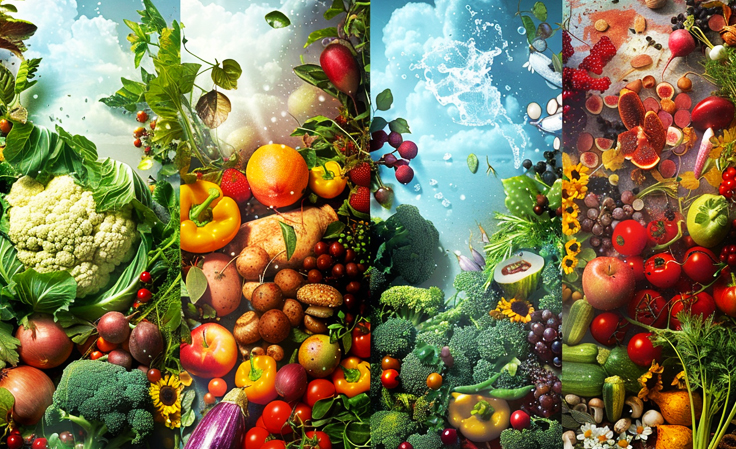
If you’ve ever bitten into a vine-ripened tomato in the heat of July or sliced into a crisp apple during the first cool days of October, you already know something that science is only beginning to explain: food tastes different when it’s in season.
I reminded myself of that this morning when I had a local organic, non-apeel coated apple for breakfast. I called the farmer myself and snagged these, so good!
It doesn’t just taste better, it feels better too. It hits differently. It nourishes in a way that’s hard to describe but impossible to ignore.
There’s a reason for that, and surprisingly, it has less to do with taste and far more to do with your biology. Humans didn’t evolve eating strawberries in December or citrus flown across the world in the dead of winter. We lived by the land, not by a global supply chain. We ate what was ready, what was ripe, what was growing, and what was preserved from the months before. Our bodies were shaped by that rhythm, physically, hormonally, metabolically, and emotionally.
Today, that rhythm is gone for most people. We live in a world where grocery stores look identical in January and July, where food has lost its connection to time, and where our bodies, whether we realize it or not, feel the consequences.
Eating seasonally isn’t just romantic or nostalgic. It’s biological. It’s holistic. And it’s one of the simplest ways to bring your health back into alignment with the natural world you live in.
Even if you just do it a LITTLE.
Let’s dive into why.
The Human Body Was Built for Seasons — Even If Modern Life Isn’t
Before technology, refrigeration, industrial agriculture, and worldwide shipping turned food into a constant buffet, humans lived in partnership with their environment. Winter meant hunting, storage crops, broth, and fermentation. Spring meant fresh greens, herbs, and the first soft vegetables pushing through cold soil.
Summer meant abundance with fruit, hydration, and sun-rich produce. Fall meant hearty roots, harvest vegetables, and preparation for colder months.
Summer is my favorite season of eating becuase I can't get enough of melons! If I just had a garden of melons, I would be happy.
Your ancestors didn’t choose seasonal eating. They lived it.
And the human body adapted its metabolism, digestion, and microbiome around that yearly cycle.
The modern world has flattened these cycles. Most homes have the same meals year-round. Grocery stores stock the same produce regardless of season. People eat strawberries in January, apples in June, and lettuce every day of the year without ever noticing that food doesn’t truly exist outside the timeline nature intended.
The problem is that your biology didn’t flatten with it.
Your hormones still expect seasons.
Your metabolism still expects seasons.
Your microbiome still expects seasons.
Your appetite, sleep cycles, and energy rhythms still expect seasons.
When your food no longer reflects the world outside your window, something becomes misaligned, and your body feels that misalignment in ways big and small.
And trust me when I say...food tastes better when it is in season! You will literally taste the difference.
How Seasonal Eating Restores Your Natural Rhythm
Eating seasonally reconnects your body to its internal clock, just like avoiding blue light, not in a vague, spiritual way, but in a profoundly biological one. Your circadian rhythm is influenced not only by light, but by food, and by the natural timing of nutrients that different seasons provide.
When you eat seasonally, your daily rhythms become easier to regulate. Your digestion begins to follow a smoother pattern. Your sleep becomes deeper and more restorative. And your energy levels feel like they match the time of year, rather than floating in a constant state of imbalance.
Think about how differently you feel in June versus January.
Your appetite changes. Your movement patterns change. Your mental state changes.
Seasonal food mirrors those changes.
In summer, your body thrives on hydration-rich plants, bright antioxidants, and foods that cool and refresh.
Winter calls for the opposite — warmth, density, slow digestion, and deeper nourishment.
When your meals follow the season outside your door, your body doesn’t have to work against itself. It moves in rhythm rather than resistance.
Spring Eating: The Season of Lightness and Awakening
Spring is the season of renewal, not just for the land, but for the human body. After months of heavier meals and a slower winter pace, your digestion is ready for lighter foods. This is the time when the earth offers exactly what the body needs to transition: tender greens, young shoots, fresh herbs, radishes, and early peas.
These foods naturally support the body as it “thaws” from winter. They offer minerals, chlorophyll, and plant compounds that gently stimulate digestion and metabolism. It’s no coincidence that traditional cultures used spring as their cleansing season long before detox became a buzzword. Nature itself provides the detox.
Eating salads made with real spring greens, sipping on brothy vegetable soups, or cooking with herbs that burst with life mirrors what your body instinctively craves this time of year. Spring food brings clarity. It brings energy. It wakes the body back up.
When I say spring greens...I'm leaning heavy into the dandelion! Dandelions are one of the most amazing plants for all that they can be used for.
Summer Eating: The Season of Abundance and Hydration
Summer is bright, hot, and expansive, and the foods that appear this time of year reflect that energy perfectly. Fruits and vegetables come in full force, packed with water, electrolytes, vitamins, antioxidants, and natural sugars that fuel long days and higher activity levels.
Think of biting into a cold, juicy peach or a handful of sun-warmed berries. Think of fresh cucumbers, tomatoes, peppers, melons, basil, zucchini. These foods hydrate and cool the body. They lighten digestion, support skin exposed to sun, and offer the rapid energy needed during this season of high movement.
Modern people often wonder why they crave raw foods and fruit in summer, it’s because the human body still remembers what this season requires. Seasonal eating in summer feels effortless because abundance is built into the land itself.
Fall Eating: The Season of Grounding and Strength
Fall is the bridge between warmth and cold, and the foods that ripen now reflect that shift. Pumpkins, squash, apples, carrots, sweet potatoes, mushrooms, and late-season greens offer grounding nourishment and deeper minerals.
Fall meals naturally become warm, hearty, and comforting. Roasting becomes more appealing. Soups and stews start appearing again. The body instinctively prepares for colder months, and fall foods support that shift with slow-digesting carbohydrates, warming spices, and minerals that strengthen immunity before winter arrives.
When you eat with fall, you feel your body settle. You feel more rooted, get it? More stable. More prepared.
Winter Eating: The Season of Restoration
Winter is the season of stillness. And the foods that nourish during winter reflect that inward shift. Root vegetables, stored apples, cabbage, preserved foods, meat, broth, fat, and fermented vegetables provide warmth, density, and deep nourishment.
This is the time for slow cooking, rich soups, hearty stews, fatty cuts of meat, and foods that warm you from the inside out. Winter eating supports the immune system, stabilizes energy, and provides the building blocks your body needs for repair during the darker months.
This is not the time for raw salads or cold smoothies, those pull the body away from the warmth it needs. Winter eating brings harmony because it prioritizes nourishment over stimulation.
Seasonal Eating and Digestion: Your Gut Understands Timing
One of the biggest shifts people notice when they start eating seasonally is improved digestion. Modern guts are overwhelmed, not just by processed foods, but by disconnected foods. When you eat the same vegetables year-round, your gut bacteria never get the signals to adapt.
Seasonal eating naturally introduces cycles of fiber, plant compounds, and nutrients that keep your digestion dynamic and resilient. Instead of bombarding your gut with the same foods daily, you offer variety, and that variety trains your digestion to become stronger.
This is why many people experience less bloating, more regular bowel movements, and smoother digestion when they begin eating according to season. Their gut finally feels stimulated, supported, and aligned with the natural ebb and flow it was built for.
Seasonal Eating Helps Regulate Hunger, Cravings, and Metabolism
Have you ever noticed that your cravings change throughout the year?
In warm, sunny months, you naturally want fresh foods, water-rich produce, cooled textures, and hydrating meals.
In cold months, you prefer warm meals, slow-cooked foods, fats, comfort, and grounding textures.
This is not a coincidence, it is how we were created! So neat!
When you eat foods that match the season, you naturally regulate appetite, blood sugar, cravings, meal satisfaction, and overall caloric needs.
Instead of fighting cravings, you begin to understand them as cues, your body’s intuitive way of guiding you toward harmony. It is so important to tune into our bodies during this time when every system is trying to tune us out and rip us away from our natural intuition!
Seasonal eating makes eating feel intuitive again. It removes the mental war around “what should I eat?” and replaces it with “what does the season provide?”
Seasonal Eating Strengthens Emotional Well-Being
This part surprises people, but it shouldn’t: your emotional health is tied to your environmental rhythm.
When you eat seasonally, you begin to feel more connected to your surroundings. You feel the shift from spring to summer to fall to winter in your meals. You become attuned to change. You begin to slow down when the world slows down, and you open up when the world opens up.
Eating seasonally is grounding.
It anchors you in time.
It reminds you that everything moves in cycles.
People who follow seasonal eating often report feeling more stable, more present, and more emotionally balanced, not because food magically fixes emotions, but because living in rhythm reduces the internal friction caused by constant disconnection.
How to Eat Seasonally in a Modern World
I am on repeat about this: call your local farmers! See what they have growing for the season.
The beauty of seasonal eating is that it doesn’t require perfection, only awareness. Even small shifts create profound changes.
You can start by exploring what’s in season at your local farmer’s market. You can join a CSA and let the land determine your weekly meals. You can grow a few herbs or vegetables yourself, even in pots. You can simply begin buying foods that look fresher, juicier, or more vibrant, because seasonal food always looks alive.
When you allow the season to guide your plate, you’ll feel the shift immediately. Meals taste richer. Food feels more satisfying. Cooking becomes more intuitive. And suddenly, your body starts syncing with the world instead of existing separately from it.
Seasonal eating isn’t restrictive, it is liberating. And the best part?
Food tastes much better!
I recently did a podcast on this topic you can listen to here: Eat with the seasons - Your ancestors did for a reason
FAQs: Seasonal Eating
1. Do I need to follow seasonal eating perfectly to see benefits?
Not at all. Even small seasonal shifts, buying a few seasonal vegetables, changing your meals with the weather, or exploring seasonal fruit, can create noticeable improvements in digestion, energy, and overall health.
2. What if I live somewhere with long winters and limited produce?
Seasonal eating in winter relies on hearty roots, preserved foods, broths, meat, winter squash, fermented vegetables, and storage crops. These foods are deeply nourishing and support winter metabolism naturally.
3. Does seasonal eating require shopping at expensive stores?
Usually the opposite. Because seasonal foods grow abundantly at the right time of year, they are often cheaper, fresher, and more nutrient-dense.
4. Will eating seasonally improve my digestion?
Yes. Seasonal foods support the natural patterns of digestion, introduce beneficial plant compounds at the right time, and help your microbiome shift throughout the year.
5. What’s the easiest way to start eating seasonally today?
Look at what’s freshest and grown closest to where you live. Choose foods that match the season outside your window, even if you make just one seasonal swap per meal.
