
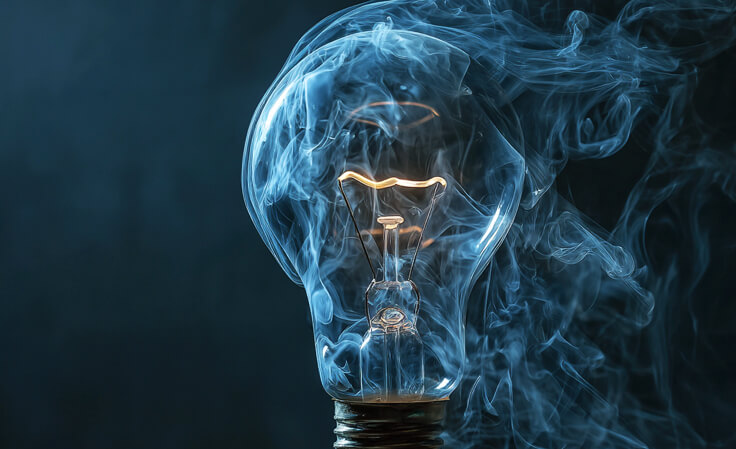
There are certain changes in modern life that happened so quietly we barely noticed them. No press conference. No real public debate. Just a slow disappearance, followed by something new taking its place. One day, the familiar warm glow in our homes was simply gone, replaced by lighting that felt brighter yet colder, sharper yet flatter. We were told it was progress. We were told it was better. And most of us accepted it without question.
I even did!
But lighting is not a neutral thing. It does not simply allow us to see. It shapes how we feel in a space, how our nervous system responds, how our bodies understand time, and even how our skin and eyes experience daily stress. When incandescent bulbs were phased out and replaced with newer technologies, the conversation focused almost entirely on energy efficiency and cost savings. What was left out of the discussion was how profoundly light interacts with human biology.
The story of the incandescent bulb is not just about electricity or efficiency. It is about comfort, rhythm, and the quiet relationship between the environment we create indoors and the bodies we live in every day.
I think it is a disgrace, but on purpose, that they got rid of the incandescent light bulbs from our home. When I posted about it online, people from all over the world shared how they can't find them anymore and feel the same way about how it is one big scam to harm our health.
Why Incandescent Light Felt So Different
Incandescent bulbs worked in a remarkably simple way. Electricity passed through a thin filament, heating it until it glowed. That glow produced a smooth, continuous spectrum of light, meaning it contained balanced wavelengths similar to sunlight and firelight. This is important because human beings are affected by fire light. Our eyes, brains, and hormones are deeply attuned to these natural light sources, even if we no longer consciously think about them.
The warmth of incandescent light did more than make a room feel cozy. It created depth, shadows, and softness. It allowed evenings to feel like evenings rather than an extension of the day. Bedrooms felt calming instead of stimulating. Living rooms felt restorative instead of alerting. The light didn’t demand attention; it simply existed.
Incandescent lighting supported natural circadian rhythms in a way that modern artificial light often does not. It gently signaled the body that the day was winding down, allowing melatonin production to begin and the nervous system to relax. For decades, people lived under this kind of light without ever needing to analyze it, because it simply worked with the body instead of against it.
I can tell you for a fact after changing out my LEDs to incandescents made a huge difference in my mood and coziness feeling in my home.
The Official Reason Incandescent Bulbs Were Phased Out
When incandescent bulbs were eventually targeted for removal, the explanation given to the public was straightforward and compelling. These bulbs, we were told, were inefficient. Much of the energy they used was released as heat rather than visible light, and in a world increasingly concerned with energy consumption and environmental impact, that inefficiency was framed as irresponsible.
Newer lighting technologies promised longer lifespans and lower electricity usage. The shift was positioned as a win for consumers and for the "planet." Incandescent bulbs were labeled outdated, wasteful, and unnecessary in a modern world focused on optimization.
What was never truly discussed was whether efficiency alone should be the deciding factor in something as biologically influential as indoor lighting. Saving energy is not inherently wrong, but when efficiency becomes the only metric that matters, other consequences tend to be ignored. Comfort, health, and human experience rarely fit neatly into spreadsheets.
Unfortunately, I think the people who made this decision are well aware of all of this, and they did it anyway.
What Replaced Incandescent Bulbs and Why It Matters
The disappearance of incandescent bulbs ushered in widespread use of compact fluorescent lamps and, later, LED lighting. These technologies produce light in a fundamentally different way. Instead of heating a filament, they rely on electronic components, diodes, and drivers that convert electricity into light through complex processes.
The result is a type of illumination that may look similar at first glance but behaves very differently at a biological level. LED lights emit a much higher proportion of blue light, even when marketed as warm or soft. They also often flicker at frequencies too fast for the conscious eye to detect, yet still perceptible to the nervous system.
So many people said they just use warm LED light bulbs. I hate to break it to you, but an LED light is still an LED light. Still flickers, and still affects our biology.
This combination of increased blue light exposure and subtle flicker creates an environment that keeps the brain in a mild state of alertness. The body interprets blue light as a daytime signal, which means that exposure after sunset can confuse the internal clock. Instead of winding down, the nervous system remains stimulated, delaying sleep signals and interfering with natural rest cycles.
Over time, this disruption becomes normalized. People assume it is stress, aging, or modern life in general. Few stop to consider the role that lighting plays in shaping how the body experiences each day and night.
Seriously, we need to stop normalizing garbage like this in the name of convenience or efficiency. It is not worth it!
How Artificial Light Affects the Skin
Skin is often thought of as something separate from internal health, but in reality it is one of the most responsive organs in the body. It reacts constantly to environmental input, including temperature, air quality, humidity, and light. While most people associate light-related skin damage with sunlight, artificial light also plays a role, particularly when exposure is prolonged and daily
Blue light has been shown to contribute to oxidative stress in skin cells. Oxidative stress accelerates the breakdown of collagen and elastin, the proteins responsible for maintaining firmness and elasticity. Unlike occasional sun exposure, artificial light exposure tends to be constant. We sit under it for hours at a time, day after day, often without any form of protection or recovery. If you want to learn more in depth about what blue light does, I discussed more here.
Indoor environments compound this stress. Artificial lighting is often paired with dry air, limited natural ventilation, and extended screen use. Together, these factors create conditions that challenge the skin’s ability to maintain its barrier and retain moisture. Over time, this can contribute to dryness, sensitivity, and premature signs of aging that seem to appear without a clear cause.
To avoid this for myself when I am having to be in front of any screens, I make sure I have one of my tallow balms applied to my face and neck, which take most of the artificial light hit.
This is not about fear or alarmism. It is about understanding that modern environments place new demands on the body, and the skin is often the first place those demands show up.
Why Old Homes Feel Calmer Than Modern Ones
Many people notice that older homes feel different, even when they cannot explain why. The rooms feel warmer, the evenings feel slower, and the spaces feel more restful. Lighting plays a major role in this perception. Incandescent bulbs created natural gradients of light and shadow, allowing spaces to feel layered rather than uniformly bright.
Modern lighting tends to flatten a room. Bright, evenly distributed light eliminates shadows and creates constant visual stimulation. While this may seem practical, it can also feel exhausting. The nervous system never receives a signal that it is safe to rest.
Older homes were often designed with natural light cycles in mind, relying on daylight during waking hours and softer illumination at night. This rhythm aligned with the body’s expectations. In contrast, modern homes often maintain the same level of brightness from morning until bedtime, blurring the boundaries between activity and rest.
This constant stimulation affects more than mood. It influences sleep quality, stress levels, and the skin’s ability to repair itself overnight. The body relies on nighttime repair processes to maintain resilience, and when those processes are disrupted, signs of fatigue tend to surface more quickly. Even more of a reason to invest in quality skincare.
Living in an Environment the Body Didn’t Evolve For
Human biology has not changed as quickly as technology. Our bodies are still calibrated for natural cycles of light and dark, warmth and coolness, stimulation and rest. Modern indoor environments often ignore these rhythms in favor of convenience and efficiency.
We cannot realistically undo every aspect of modern living, but we can acknowledge its effects. Artificial light is now an unavoidable part of daily life, particularly in colder months or indoor work settings. Recognizing this reality allows for more thoughtful choices about how we support the body within it.
Supporting the skin, in particular, becomes less about correction and more about reinforcement. Instead of constantly trying to fix perceived flaws, the focus shifts to strengthening the skin’s natural barrier so it can better withstand environmental stressors it was never designed to face.
This is where deeply nourishing, protective skincare becomes relevant, not as a solution to aging, but as quiet support. A rich balm that reinforces the skin’s barrier can help counteract dryness and stress caused by artificial environments, offering comfort and resilience rather than aggressive intervention. Products like my Age Defense Whipped Balm fit naturally into this philosophy, providing support rather than promising transformation.
Progress Is Not Always Synonymous With Improvement
The removal of incandescent bulbs was framed as progress, but progress is not always linear. Sometimes it prioritizes metrics over experience, efficiency over comfort, and scalability over human well-being. When something disappears quietly, it is worth asking what it provided before it was deemed obsolete.
It is interesting to note that the World Economic Forum (WEF) has funky agendas laid out for us ending with "you will own nothing and be happy." I can't help but wonder how happy I can really be under LED light when it genuinely affects my biology. Am I suppose to tune out my body's natural communication?
Maybe that is what they actually want...
I can't tell you how much better I feel now that I have replaced my LEDs with incandescents. I even had the "warm" LEDs as well, but they always irritated me. I didn't like having some of my light fixtures on because they had LED bulbs, so I avoided turning them on. I rely on natural light a lot of the time here on the homestead anyway.
When I finally switched out those bulbs, I felt more relaxed. And wouldn't you know it...I use those fixtures more often!
I am asked "Does your power bill increase with incandescent lighting?" No, it hasn't. I noticed my bill steadily increasing with LEDs though. That is part of the reason I believe they are one big scam.
We may not be able to bring incandescent bulbs back into every fixture, but we can approach modern living with greater awareness. We can choose better light bulbs when possible, dim lights in the evening, and support our bodies and skin with nourishment rather than constant stimulation.
A Thoughtful Way Forward
This is not a call to reject modern life. It is an invitation to engage with it more thoughtfully. Awareness allows for choice, and choice allows for balance. By understanding how light affects the body and skin, we can make small adjustments that support long-term well-being.
Let's return to the way our grandparents lived!
Frequently Asked Questions
Why were incandescent bulbs removed so quickly?
They were phased out primarily due to energy efficiency standards rather than concerns about safety or health, with little public discussion about their biological impact.
Is blue light from indoor lighting really significant?
Prolonged daily exposure can contribute to circadian disruption and oxidative stress, particularly when exposure extends into evening hours.
Can artificial lighting affect how skin ages?
Yes, ongoing exposure to blue light has been linked to oxidative stress, which can accelerate the breakdown of collagen and affect skin resilience over time.
How can I reduce the impact of artificial lighting in my home?
Using incandescent lighting, dimming lights in the evening, and limiting unnecessary brightness can help support natural rhythms.
How does nourishing skincare help in modern environments?
Supportive, barrier-focused care helps the skin retain moisture and defend itself against environmental stressors rather than constantly reacting to them.
